There’s a version of sex toy history that starts with a pearl-clutching Victorian doctor and ends with a rabbit-eared silicone vibrator. It’s a neat story, and it’s mostly wrong. The real arc is messier, more political, more commercial, and frankly more interesting than the mythology suggests. We’ve covered the deeper strangeness of that history before in our piece on five things you probably didn’t know about the history of sex toys, arguing that these objects are politically contested artefacts whose past most people have never been taught properly, and that the freedoms we currently enjoy to buy, own, and discuss them should never be taken for granted. That argument stands. But six years on, with AI-assisted devices now sitting on Boots shelves and long-distance vibrators threading themselves into the fabric of modern relationships, it’s time to pick up where we left off and trace the full technological arc, from the crude mechanical devices of the early twentieth century to the biometric, app-connected, personalised pleasure technology arriving right now.
The Mechanical Era
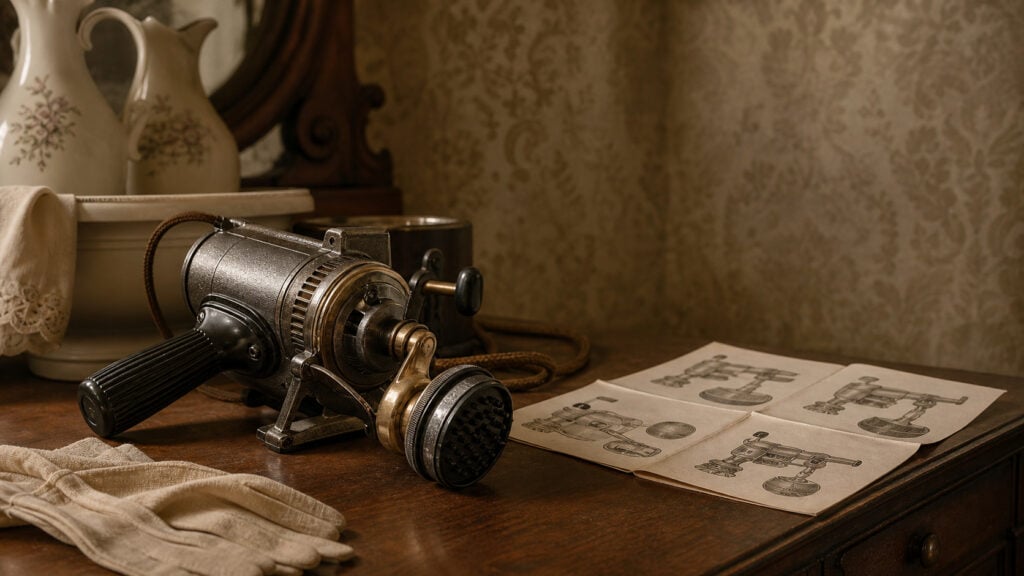
Cast your mind back to the first decades of the twentieth century and you’re looking at a pleasure product landscape that is almost unrecognisable. The devices that existed were mechanical, often painful-looking by contemporary standards, and almost never sold honestly for what they were. Vibrators appeared in medical catalogues as “massagers” or “health appliances”, marketed to treat everything from headaches to hysteria, and the fact that their actual use was broadly understood but publicly unacknowledged tells you everything about the period’s relationship with female pleasure. People with vulvas seeking any kind of targeted genital stimulation were doing so through a thick fog of institutional denial.
What mattered most about these early devices was their construction. Cast iron, brass, hand-cranked or steam-powered mechanisms offered stimulation that was blunt at best and genuinely hazardous at worst. There was no concept of body-safe materials because the entire category of “body-safe” didn’t exist as a framework. These were household appliances that happened to vibrate, sold to women who had to maintain the fiction that they were using them for their back.
Related products
The electrification of domestic life in the 1920s and 1930s changed the hardware significantly. Mains-powered personal massagers became far more practical, and devices like the Oster Stim-U-Lax became bestsellers. The power source shifted from human effort or steam to electricity, which made sustained vibration genuinely possible for the first time. What didn’t change was the cultural camouflage. These remained “massagers”, catalogued between hair dryers and heating pads, and the industry understood implicitly that honesty would mean censorship.
Mid-Century and the Shift Underground

The post-war decades brought both greater material sophistication and, in the UK specifically, a regulatory environment that kept the industry firmly in the shadows. The Obscene Publications Act of 1959 and the decades of inconsistently applied obscenity law that followed created a landscape in which what could be legally sold, advertised, and shipped occupied genuinely contested territory. Mail-order catalogues operated in grey areas. Shops existed under the umbrella of adult entertainment rather than health and wellness. The framing of sex toys as shameful objects, rather than legitimate consumer products, was partly cultural and partly a direct consequence of legal pressure.
This matters. The normalisation of pleasure tech that feels so obvious in 2025, with vibrators stocked at Boots and John Lewis, didn’t emerge from thin air. It was fought for, incrementally, by retailers, activists, and eventually by mainstream media. The freedom to walk into a shop and buy a vibrator without shame is genuinely recent and genuinely fragile, and any honest account of how the technology evolved has to hold that political context alongside the engineering.
Across the Atlantic, the 1960s and 1970s brought a different kind of shift. The sexual revolution created space for more explicit commercial sex product culture, and the introduction of materials like soft PVC and early rubbers meant devices could now be shaped more anatomically. The dildo as a distinct product category became commercially viable. The vibrator developed a recognisable form factor, battery-powered bullet shapes and wand-style massagers that would persist for decades. It’s worth saying plainly that most of these materials were not safe by any standard we’d apply today. PVC, jelly rubber, and similar compounds are porous, meaning they can harbour bacteria even after cleaning, and many formulations contained phthalates, the plasticisers now linked to hormonal disruption and carcinogenicity. Generations of people used them anyway, not because they were reckless but because nobody told them otherwise. If you’re buying today and want a clear guide to what materials to look for and what to avoid, our first sex toy guide covers this in full.
The Rabbit Moment
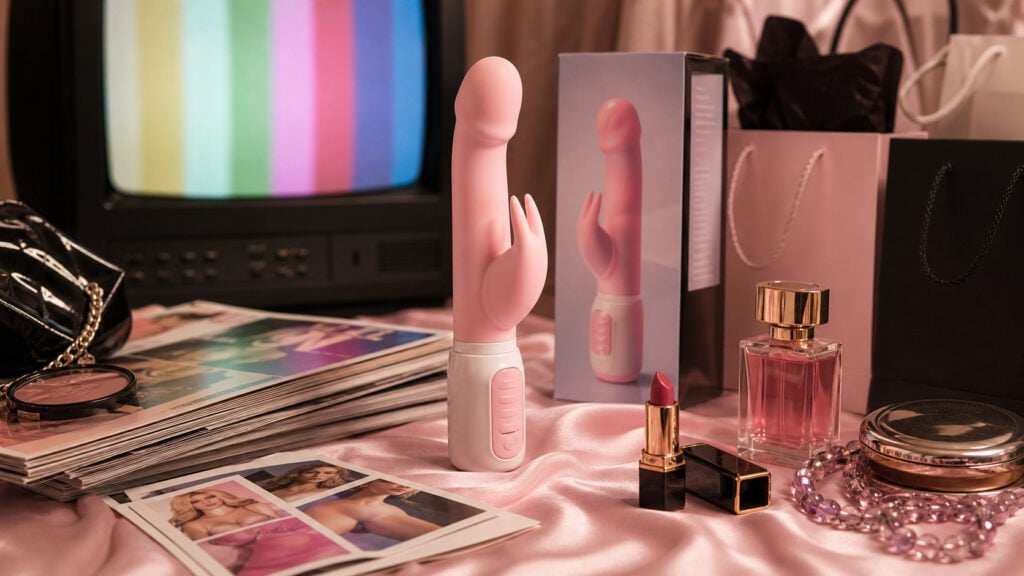
If you had to pick a single cultural pivot point for British sex toy history, the Rampant Rabbit is it. Specifically, the Rampant Rabbit as sold by Ann Summers, and specifically in the aftermath of its appearance on Sex and the City in 1998. The episode was called “The Turtle and the Hare”, Charlotte York became temporarily devoted to hers, and the effect on UK retail was immediate and measurable. Ann Summers reported extraordinary sales spikes. The conversation moved from whispered to spoken, from back catalogue to front page.
What made the Rabbit genuinely significant as a technological object, rather than just a cultural one, was its dual-stimulation design. By combining internal vibration with a separate clitoral stimulator, it acknowledged explicitly what research into female sexual response had long suggested and popular product design had long ignored, that most people with vulvas require clitoral stimulation to reach orgasm, and that penetration alone doesn’t reliably produce that. The work of researchers like Beverly Whipple and Barry Komisaruk on the neuroscience of female orgasm, and later Emily Nagoski’s synthesis of that research in her 2015 book Come As You Are, was finding its way, indirectly, into product design. The Rabbit wasn’t just a vibrator with a novelty attachment. It was a device built around a more accurate model of how pleasure actually works, one that directly addressed what we now call the orgasm gap (the persistent disparity in orgasm rates between people with vulvas and people with penises during partnered sex). It’s a gap we’ve written about at length, including in our roundup of the best sex toys for couples, and one that dual-stimulation design helped begin to close.
The materials were still largely PVC and jelly rubber in those early iterations, which is a problem we’d now flag clearly. But the shape was a revelation, and it opened a market. UK retailers who had positioned sex toys as novelty gifts or back-room adult shop products suddenly had something they could sell in high street stores, in tasteful packaging, to people who’d seen it on television. The destigmatisation that followed was real, if incomplete.
The Silicone Revolution
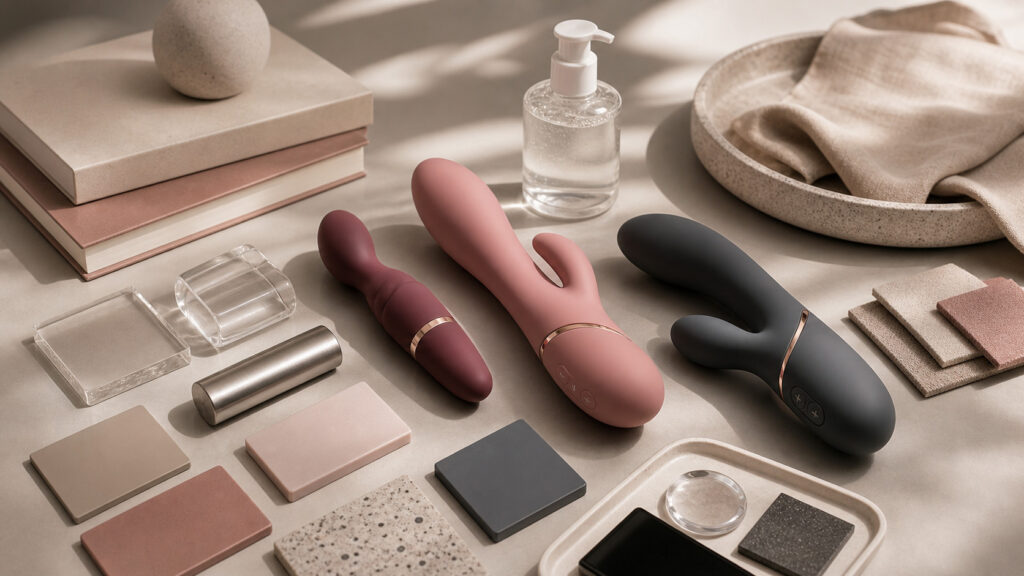
The shift that mattered most in terms of actual body safety happened in the 1990s and accelerated through the 2000s, and it was material rather than mechanical. Medical-grade silicone had existed in clinical contexts for decades, but its adoption as the gold standard for sex toy construction transformed what the industry could offer. Silicone is non-porous and non-reactive, it’s sterilisable, durable, and available in a range of firmnesses, and it made it possible to create devices that were genuinely safe for internal and external use over extended periods. to create devices that were genuinely safe for internal and external use over extended periods. Alongside high-quality ABS plastic, borosilicate glass, and stainless steel, it gave consumers a clear framework for evaluating what they were putting on or in their bodies. One critical note on silicone toys specifically: always use water-based lubricant with them. Silicone-based lube breaks down the surface of silicone toys over time, degrading both the material and your investment.
LELO was arguably the company that turned this material shift into a design movement. Founded in Stockholm in 2003, LELO brought an approach to sex toy aesthetics borrowed from luxury consumer electronics: clean lines, premium silicone, high-quality motors, and presentation packaging that looked like something from a design boutique rather than an adult shop. The LELO Ina and the LELO Sona weren’t just better made than what came before. They repositioned the sex toy as a premium lifestyle object, and in doing so they gave the wider industry permission to charge for quality and to market honestly on the basis of craftsmanship and pleasure science rather than novelty. Worth noting that the LELO Sona specifically uses sonic pulse technology to reach the internal structures of the clitoris rather than relying on surface vibration alone, which was genuinely new ground at the time.
It was also during this period that the conversation about materials began reaching consumers directly. Sex toy educators, bloggers, and early online retailers started publishing guides explaining the difference between body-safe and non-body-safe materials. If you’re starting from scratch on this, our first sex toy guide covers exactly what to look for and what to avoid. The emergence of retailers like Lovehoney in the UK was significant here, not just as a commercial entity but as a source of genuinely useful buying guidance that helped mainstream consumers understand why the £8 jelly rabbit from a service station might not be the best idea. Lovehoney’s growth from a small online operation in 2002 into one of the UK’s dominant pleasure retailers is itself a story about how the internet dissolved the shame that geography and physical retail had enforced.
Connectivity and the Philosophical Shift
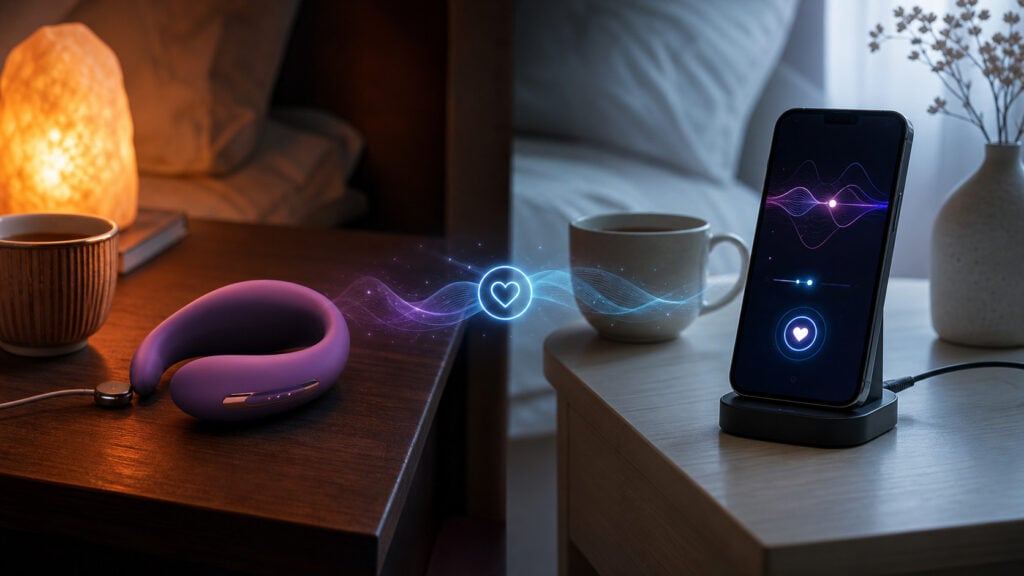
Then something more fundamental changed. The launch of the original We-Vibe in 2009, and the broader emergence of the We-Vibe Sync and other app-connected sex toys across the 2010s, wasn’t just a technological upgrade. It was a philosophical reclassification of what a sex toy actually is.
A vibrator you use alone is a personal pleasure device. A vibrator that connects to a partner’s smartphone on the other side of the world is something different, a communication tool, a mechanism for shared intimacy across distance, an object that exists in a relationship rather than in isolation. We-Vibe built their early identity around couples, designing wearable vibrators intended to be worn during partnered intercourse while both partners controlled or experienced the sensation. The Bluetooth connectivity was the point, not the hardware.
Kiiroo took this further into what the industry calls teledildonics (the synchronisation of connected devices so that tactile input on one translates into sensation on the other). The Kiiroo Pearl 2 and the Onyx 2 allowed partnered play in which thrusting or touching one device generated responsive movement in its counterpart. For couples separated by distance, whether through travel, military deployment, or genuinely long-distance relationships, this represented something that hadn’t previously existed at all.
The cultural timing mattered. The 2010s brought smartphone ubiquity, improving video calling, and a broader social recognition that long-distance relationships were not failed relationships but valid ones that needed infrastructural support. Connected sex toys arrived as part of that infrastructure, and Lovehoney, Kiiroo, and We-Vibe all leaned into relationship-centred marketing that positioned their devices as tools for intimacy maintenance rather than substitutes for a partner. This was a genuinely different pitch from anything the industry had made before.
What came with connectivity was a set of questions the industry was not fully prepared to answer. A 2017 class action settlement in Canada, following a lawsuit filed in 2016, found that We-Vibe’s app had been collecting data about device usage, including vibration intensity and frequency, without adequately disclosing this to users. The settlement was significant, but more significant was what it revealed about the gap between how quickly connected sex toys had become mainstream and how slowly data privacy frameworks had followed. If you’re shopping for an app-connected device now, in 2025, read the privacy policy. Check whether data is stored locally or transmitted to servers. Ask what the manufacturer does if they’re acquired or go bust. These are not paranoid questions. They’re reasonable consumer due diligence for any connected device, and our overview of what sex tech actually is covers the legal and ethical landscape in more depth if you want grounding on that.
The App Layer and What It Made Possible
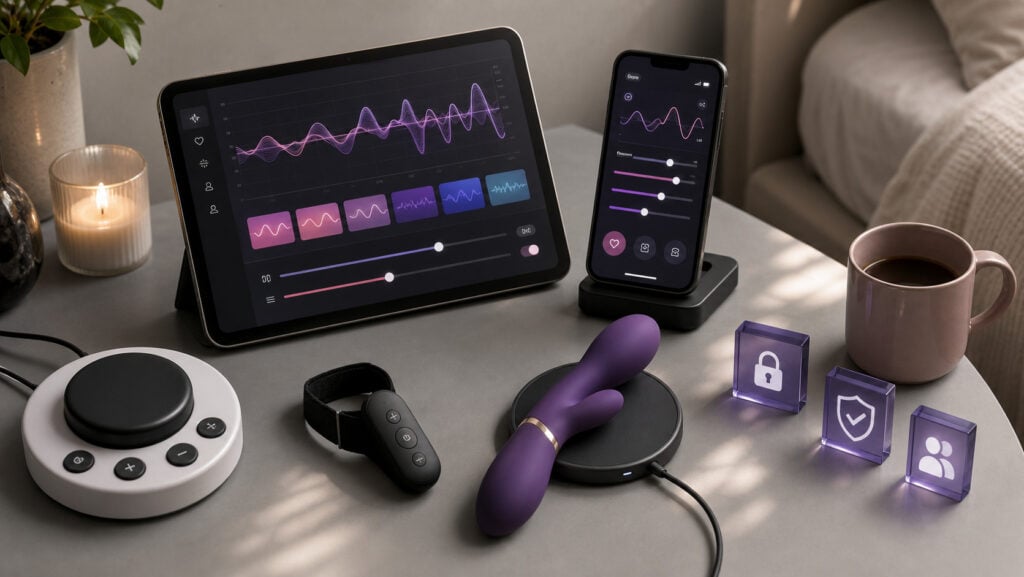
Setting aside the privacy concerns for a moment, the application layer that app-connected toys added to the category genuinely expanded what was possible for certain users. Long-distance control was the headline feature, but the more quietly significant development was customisation. Apps like the Lovense app allow users to create and save vibration patterns, sync toys to music, and programme sequences that respond to external inputs. For people with disabilities that affect manual dexterity, partner-controlled or app-controlled devices removed a genuine barrier. For people exploring power exchange dynamics within BDSM contexts, the ability to hand control of a device to another person remotely created new possibilities for negotiated, consensual play — something we’ve explored in depth in our guide on 9 ways to dominate your partner with sex tech.
Lovense built an ecosystem, rather than just a product range, releasing the Lush, the Domi, the Hush, the Diamo and more as interoperable components of a connected pleasure platform. The Lovense Lush 3 in particular became a reference product for long-distance intimacy, small enough to wear internally, Bluetooth-connected, with a claimed range that made public wear practical, though whether public wear is something you pursue is a conversation requiring explicit negotiation with anyone else involved, and clear personal risk assessment about consent, legality, and context. Our overview of what sex tech actually is touches on the legal and ethical landscape around connected devices if you want grounding on that.
Where We Are Now
By 2024 and into 2025, sex toys have reached a level of cultural normalisation in the UK that would have seemed extraordinary even fifteen years ago. John Lewis stocks vibrators. Boots carries clitoral stimulators alongside its skincare ranges. The Satisfyer Pro 2 became a social media phenomenon largely through TikTok, where the algorithm’s moderation made frank discussion difficult but didn’t stop it happening. Sex tech features at CES, the world’s largest consumer electronics show. Gwyneth Paltrow sells vibrators on Goop. Whether you find that last development reassuring or alarming is probably a matter of taste, but it marks something real about where the mainstream conversation now sits.
The devices themselves have become genuinely sophisticated. Dual-motor vibrators with independent control, pressure-wave clitoral stimulators, vibrating prostate massagers with app control, wearable vibrators designed for discrete use, and masturbation sleeves with warming elements and haptic feedback are all standard product categories now. LELO’s Sona 2 uses sonic pulses rather than direct contact, reaching internal structures of the clitoris including the vestibular bulbs, which extend much further internally than the external glans alone might suggest. Satisfyer’s range of air-pulse devices brought that technology to mass-market price points. The engineering is, by any measure, more sophisticated than anything available a decade ago.
The AI and Biometric Frontier
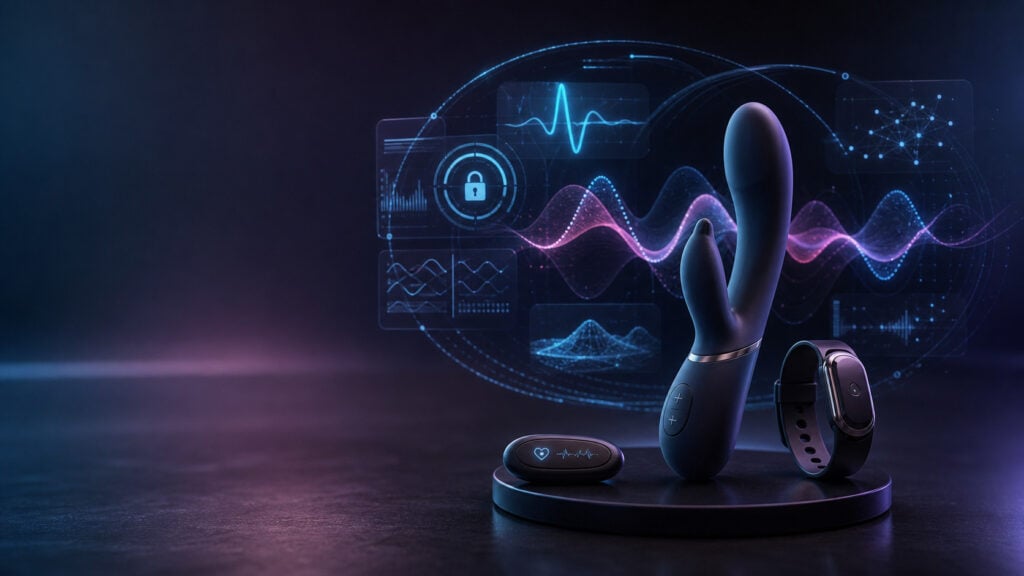
What’s coming next is where things get genuinely complex. Several manufacturers are developing devices that incorporate biometric feedback loops, using heart rate, skin conductance, and pressure sensors to adapt stimulation patterns in real time based on what the user’s body appears to be responding to. The Lioness vibrator has offered app-connected data visualisation of pelvic floor muscle activity for some years, effectively giving users data about their own arousal and orgasm patterns that they can track and analyse over time. That’s useful, and it connects directly to the case for pelvic floor awareness we’ve made elsewhere. It’s the sex toy equivalent of a fitness tracker, and the insight it can offer about what actually works for your body is genuinely meaningful.
The integration of generative AI is a more contested development. Devices that incorporate conversational AI interfaces, allowing users to interact verbally with their sex toy or to have stimulation patterns generated by an AI model responding to verbal input, are already in development and some are available. The questions this raises are not simply engineering ones. Who owns the data generated by those interactions? What happens to the profile built about your sexual preferences if that company is sold? How do you ensure the AI doesn’t reproduce biases, whether cultural, racial, or ableist, in the kinds of pleasure it optimises for? And what does it mean, philosophically and emotionally, to have an AI mediating your experience of your own body?
We don’t think these questions should slow down innovation. We do think the industry needs to be asking them loudly, and that consumers deserve manufacturers who have honest, public answers ready. The sex tech companies that will define the next decade are the ones that treat privacy, inclusivity, and ethical AI design as foundational requirements rather than optional extras bolted on after the engineering team has finished.
One Hundred Years of Change
The line from a Sears Roebuck mains massager in 1920 to a Lovense Lush controlled via smartphone from another continent is not a straight one. It bends through decades of legal suppression, material innovation, cultural upheaval, retail revolution, and a few genuinely pivotal moments of mainstream visibility, of which the Rabbit’s Sex and the City cameo remains probably the most consequential single event in British sex toy history. What this account has necessarily compressed is the parallel evolution of products designed for penis owners, where the journey from novelty to genuinely body-safe, app-connected masturbation sleeves followed its own distinct and stigma-laden path. It’s one that genuinely deserves its own deep dive, and if you’re starting to explore that territory now, our guide on 8 considerations before you buy a sex toy for your penis is a useful place to begin. As we argued in our earlier coverage of this history, none of the freedoms that allow you to read this article, buy what you like, and discuss it openly came from nowhere. They were built, contested, and occasionally nearly lost.
The technology will keep moving. AI personalisation, haptic synchronisation across virtual reality environments, and biometric feedback loops that genuinely learn what your body responds to are not science fiction at this point. They’re funded, they’re in development, and some of them are already on shelves. What remains constant, across the entire arc from mechanical massager to smart vibrator, is that the most important variable isn’t the hardware. It’s whether the people who make these things, regulate them, sell them, and use them treat pleasure as something human beings are entitled to, safely, honestly, and without shame.
That position hasn’t changed. The technology just keeps getting more interesting.
Read Next: What is Sextech?